Send Password Protected Encrypted Emails
Send a password protected, encrypted email by typing the word secure in the subject line. Required for sending patient health information to a patient.
Message encryption protects the message body and any attachments (up to 25MB). The message reaches your recipient through our Secure Messaging System. It does not protect the subject line, so never put PHI in the subject line.
To follow HIPAA, you are required to use this feature to send Patient Health Information (PHI) by email to a patient. There are no exceptions.
When you need this
- Emails inside your domain, or to other EnGuard customers: these are encrypted automatically. Use your email as normal.
- Emails to other HIPAA compliant email providers: these are encrypted in transit with Transport Layer Security 1.3 (TLS 1.3) and 256-bit encryption. TLS only protects the message on its way from point A to point B. Once it is delivered, it sits in the recipient's inbox as clear text. If you do not want PHI stored as clear text in the recipient's inbox, use this feature for an extra layer of security.
Need to send a large file or any attachment securely? Use Secure File Link. It sends a file of up to 2,000MB to any recipient. You can also put a secure file link inside an encrypted email.
How to send an encrypted email
Start a new message in any email program on your computer or mobile device. This example uses webmail.
On the subject line, type secure as the first word (it is not case-sensitive), then your subject. Write your message and send it. That is all.
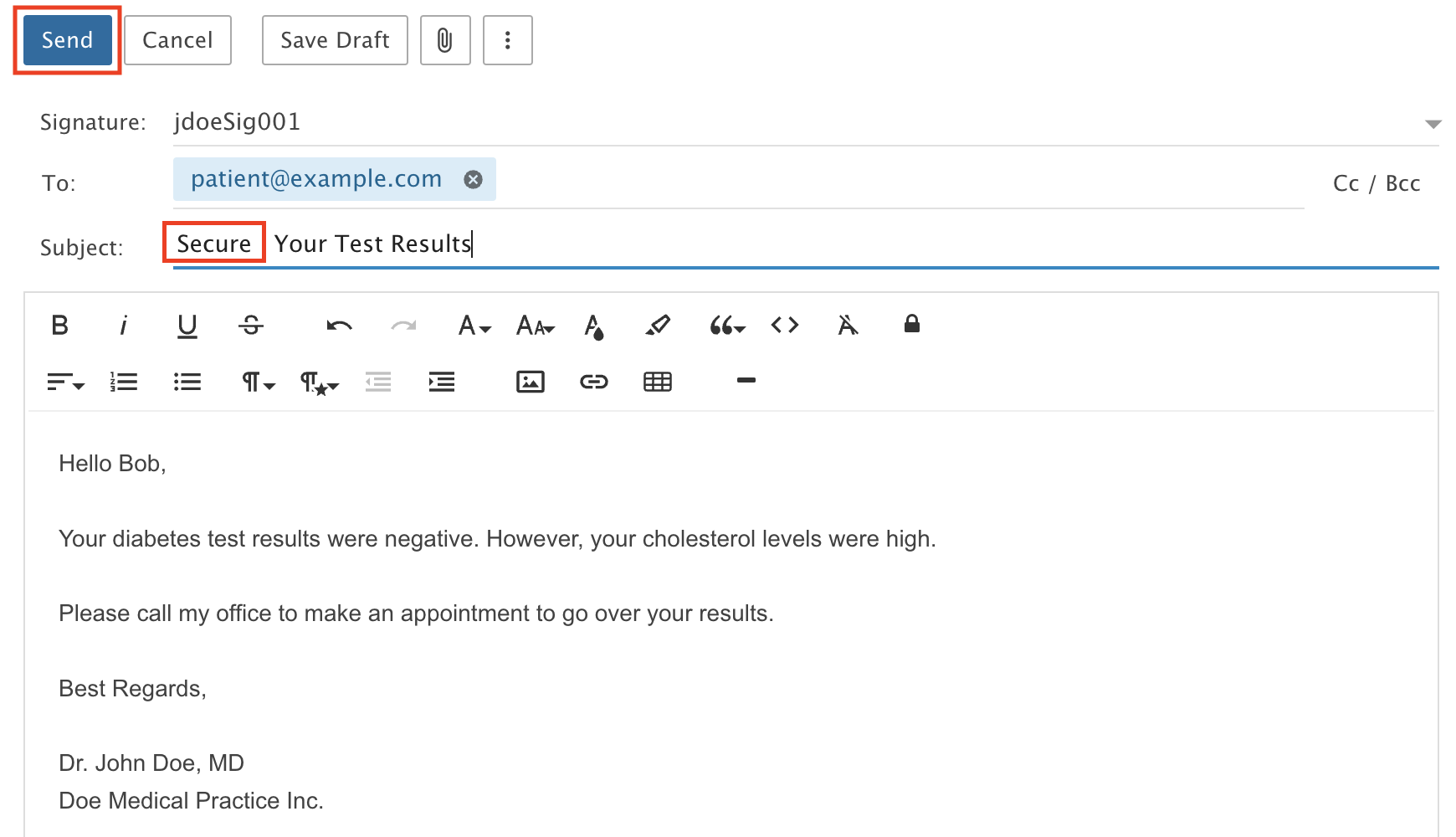
- If the word secure is anywhere in the subject line, the message is sent as a password protected, encrypted message.
- Your recipient will not see the word "secure". They will see anything else you typed in the subject line.
- Subject lines are not encrypted. Do not put sensitive patient information in any subject line.
- Put PHI in the message body, where it is protected. Keep the subject general. For example, instead of "John's Therapy Appointment with Dr. Smith", use "Your Appointment" and put the name, the type of treatment and the doctor in the message body.
What happens next
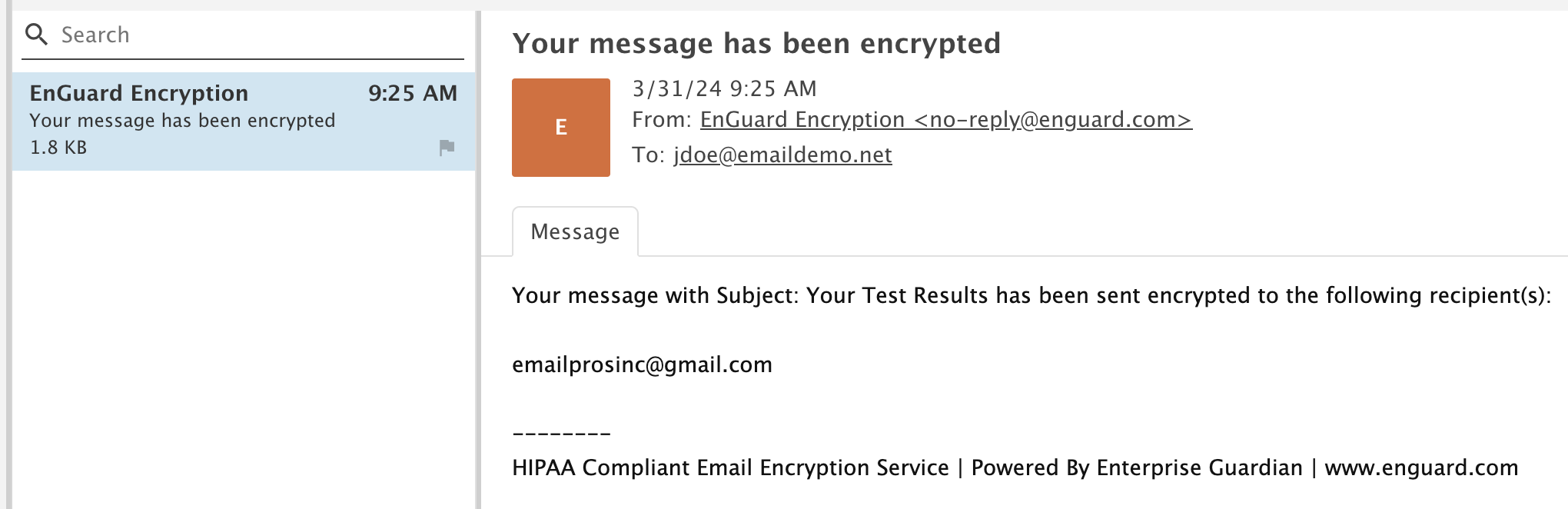
You get an email confirmation that the message was encrypted and sent.
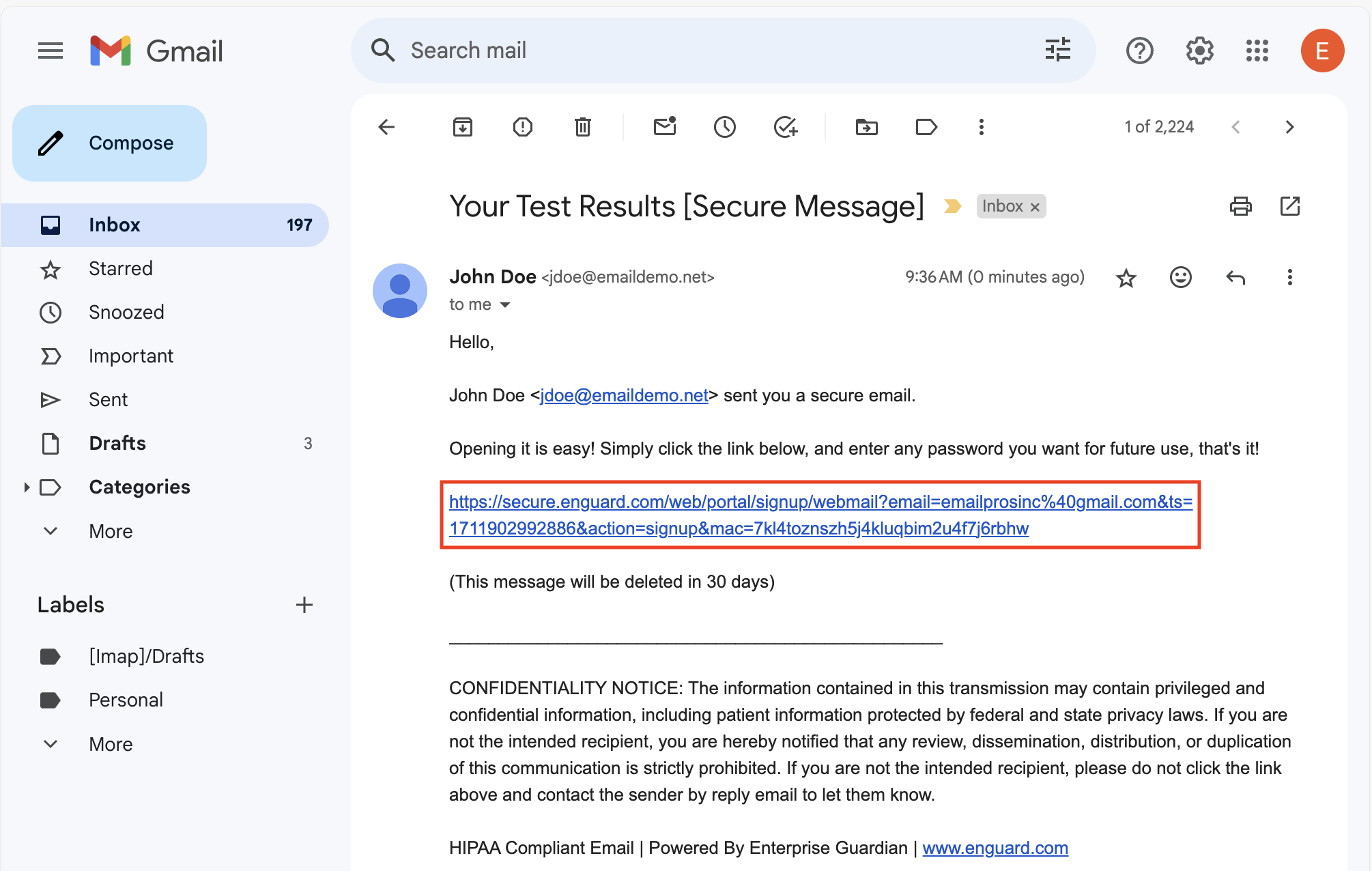
Your recipient gets an email notification that you sent them a secure message. They click the link to open a secure web page with the message.
They type any password they want to log in and see your message. They use that same password to open all future encrypted emails from you.
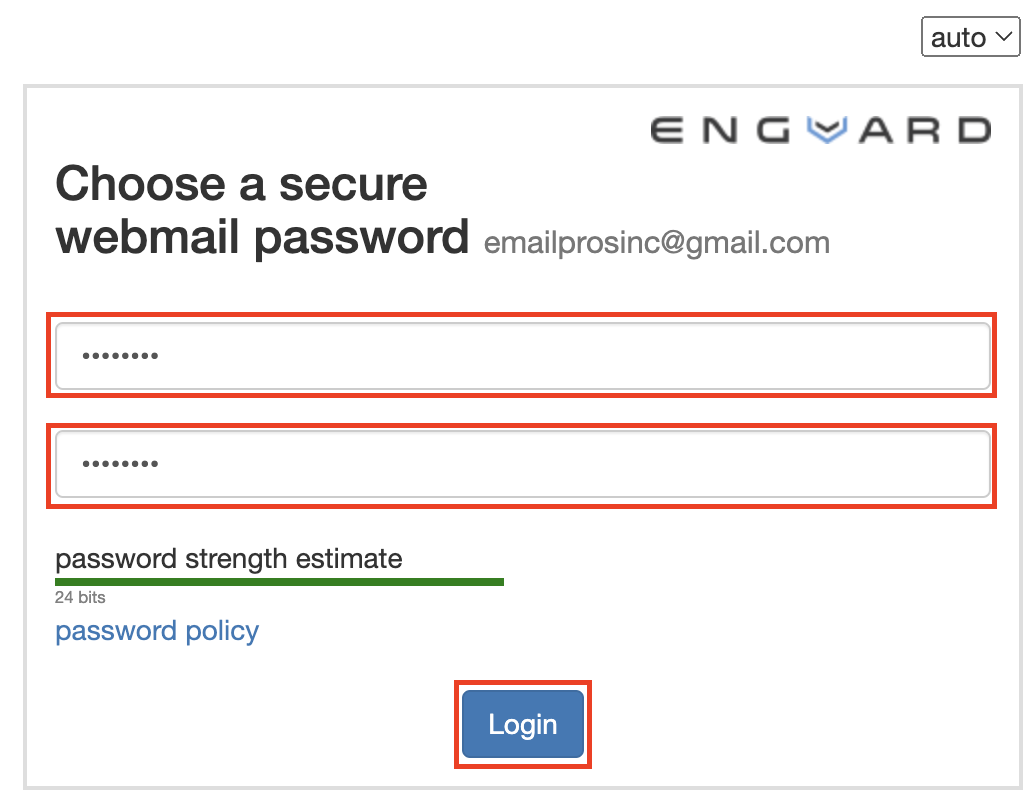
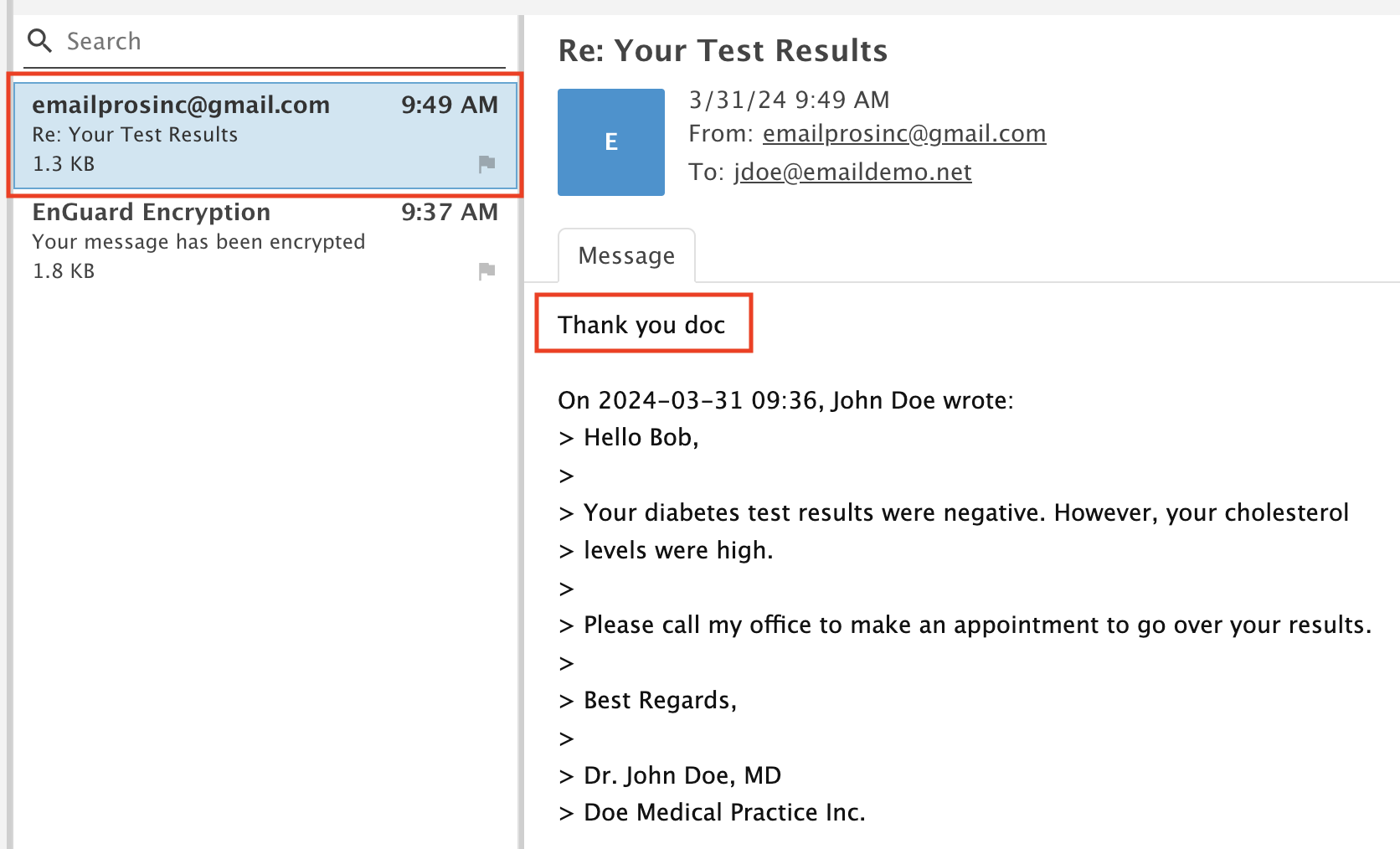
Once logged in to the Secure Messaging System, they can read your message and reply to you securely. They can also start a new message to you from there.
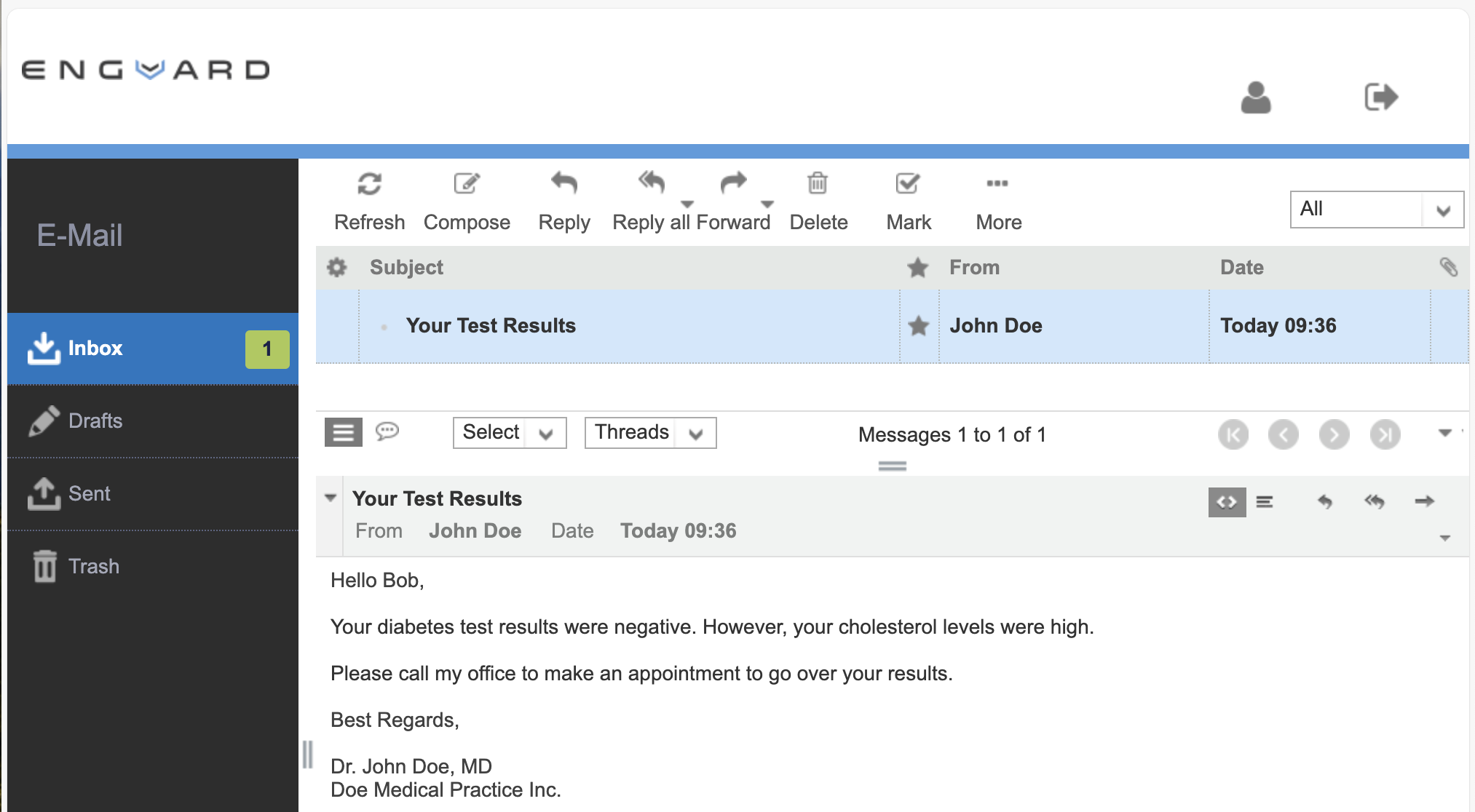
Replies and follow-up messages
Replies and new messages your recipient sends from the Secure Messaging System arrive in your Inbox as clear text.
If you reply without typing secure, your message goes straight to their inbox as clear text. Type secure again each time to keep the conversation secure.